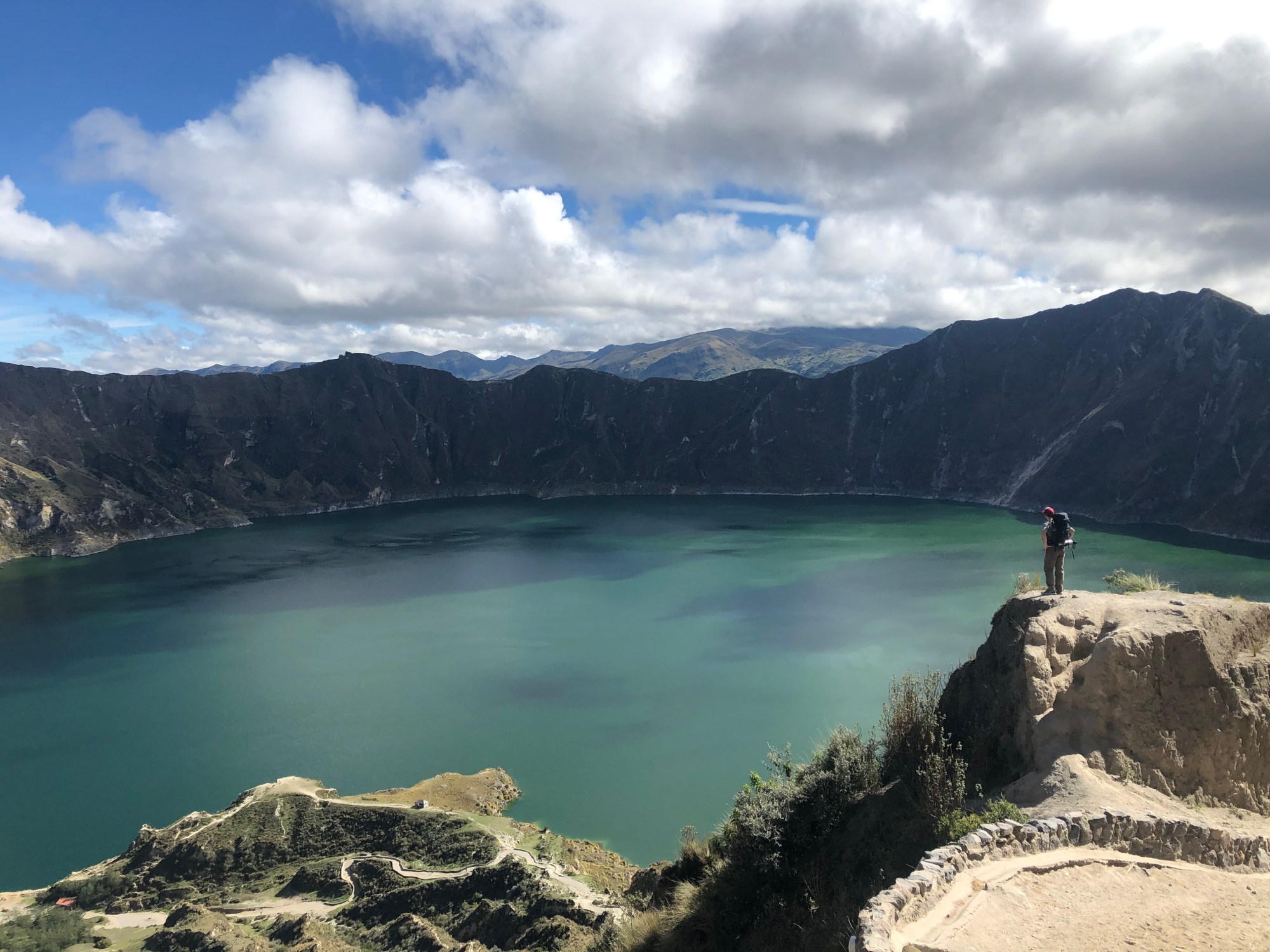
In this post, I’ll talk about my experience on the Quilatoa trek in the Andes of Ecuador. This is a bit more personal narrative than travel-friendly. For those that happen upon this, I recommend Lulu Llama Hostel and Cloud Forest Hostel for lodging. There are many other blogs that have more details about mileage, directions, etc. Hopefully these pictures will encourage you to check it out.
Latacunga
Latacunga is the launch point for adventures to Cotopaxi and the Quilatoa Trek. As you have guessed from the title, the latter is the reason I was there.
My new friend Mike and I stuck together from Quito until now, but we were also joined by our friend from Germany Sabine. We met up at a hostel called Hostel Tiana. There we quickly added two more new friends from the Netherlands, Steven and Anneka. It seemed we had a nice group developing for the trek.
The five of us explored the city for a few hours. We were on a query to locate t-shirts (a few of us were running out of clean clothes and laundry is never a fun way to spend an afternoon) and dinner. We also needed bottled water. Its not a good idea to drink the water in Ecuador (or use it to brush your teeth).

Latacunga was strangely expensive and we could never figure out why. T-shirts in most stores were $35. Converse sneakers were $110. What happened to low-cost Ecuador? I did hit the jackpot on t-shirts at a discount grocery store which had “jeneric” t-shirts for $4.99 each. They will show up in pictures later (perhaps). We had dinner at a pizza place called Pizzeria Buona Grill, or “Good Pizza Grill” in Italian. It had 4.7 stars on Google and was pretty decent. I’d give it a 3.5-4 stars based on the quality of the pizza alone.
The city was nice, and the main square was decorated and ready for Christmas.
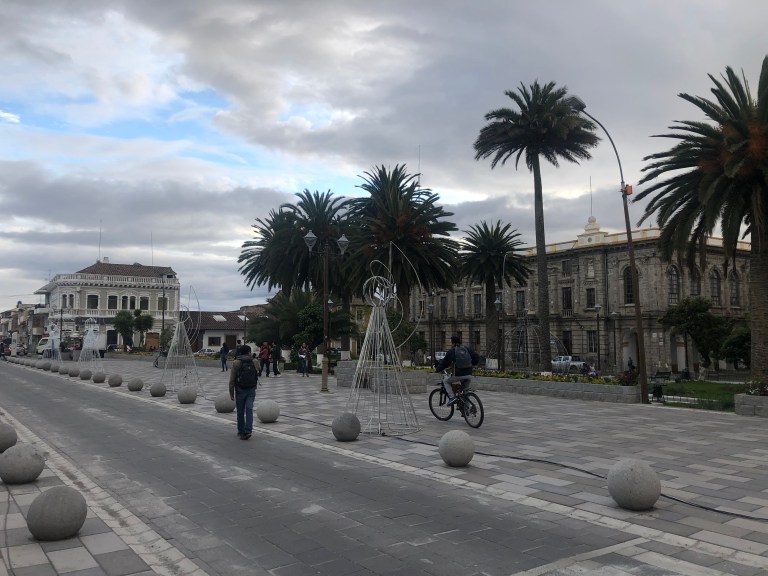
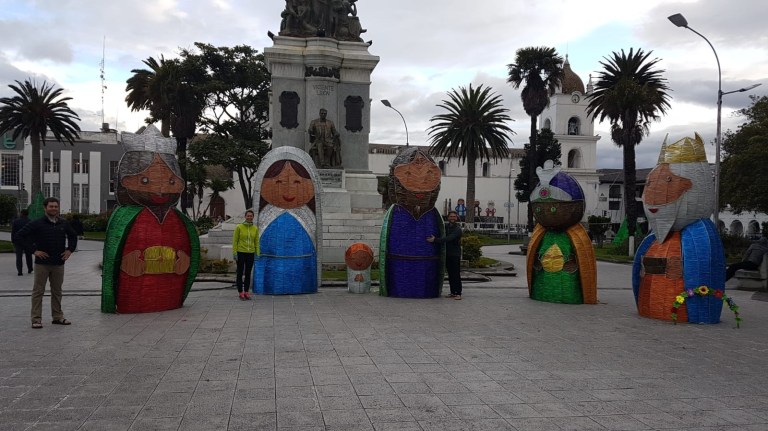
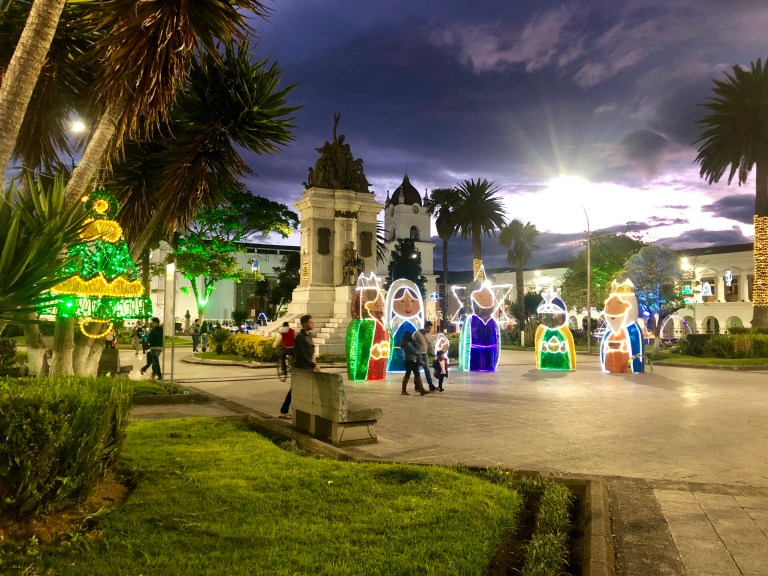
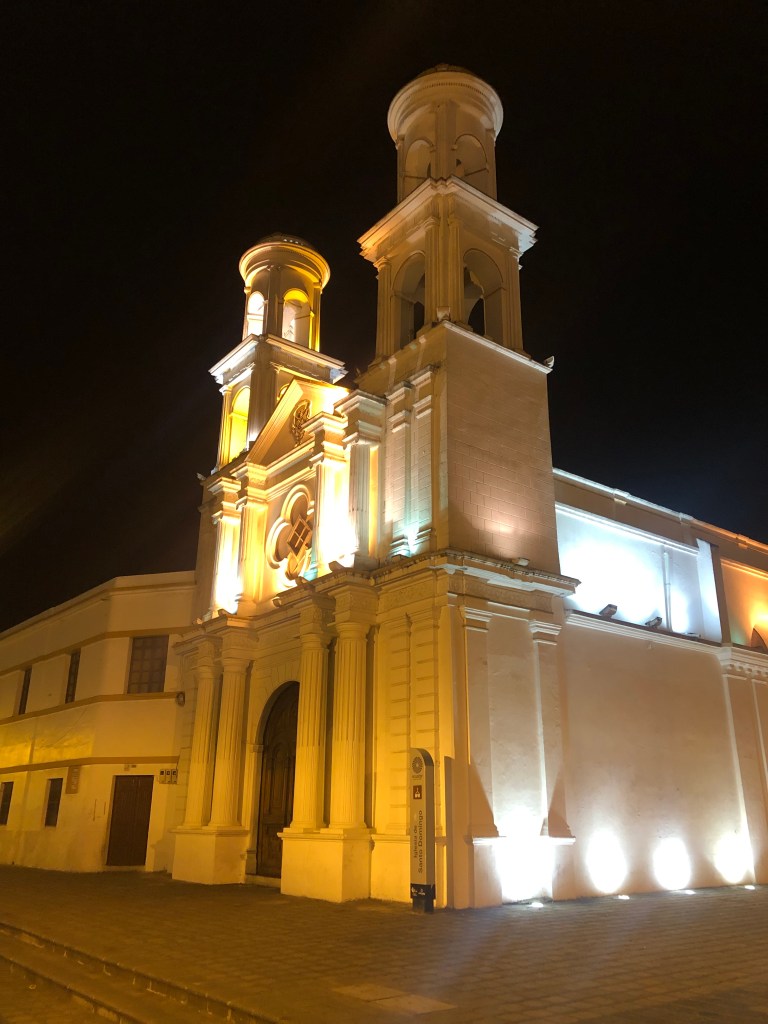
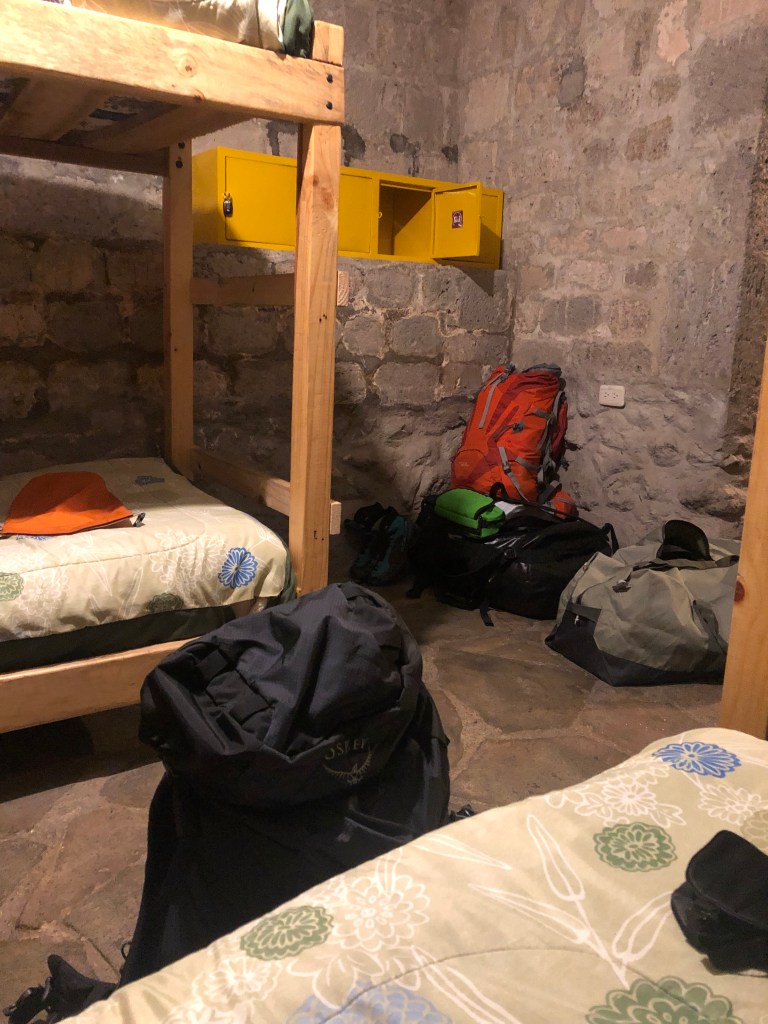
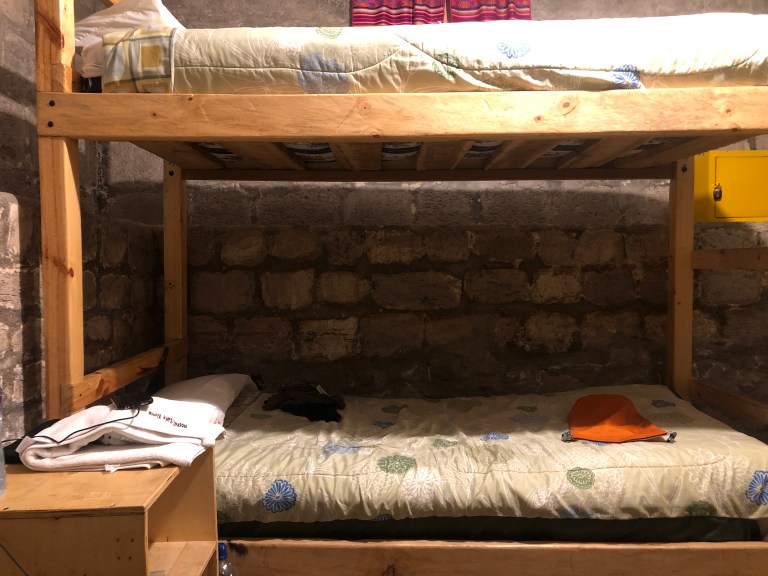
After dinner we got packed for the trek and slept in our bunks in the “dungeon”.
Quilatoa Day 1 – Sigchos to Isinlivi
Most people that hike the Quilatoa trek generally start in the north and work their way south. This leaves the Quilatoa Lake as a goal at the end of the trek. We took the same approach, which I would recommend. To do this, you first take a bus from Latacunga to Sigchos. It’s a beautiful 2-hour ride through the foothills of the Andes. I was fortunate to end up sitting next to Gonzalo from Sigchos, who was kind enough to humor me and my Spanish (he did not speak English). He shared with me about himself, his family, his town, and his country. He also asked many questions about the United States, where Atlanta was, what it was like there. I enjoyed the conversation regardless of by incessant bumbling and lack of adequate vocabulary.
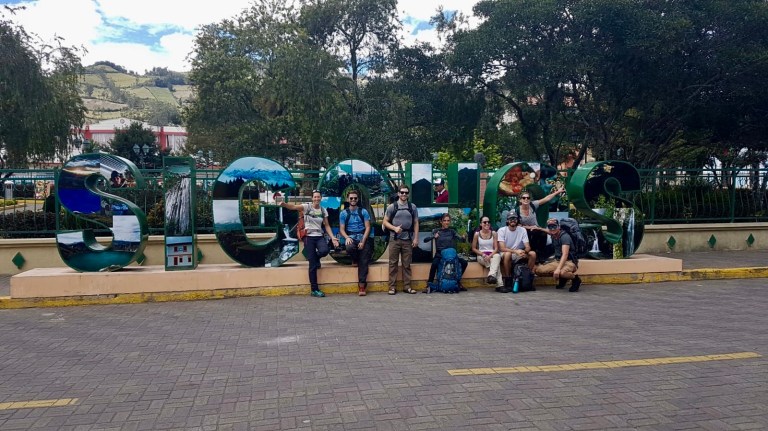
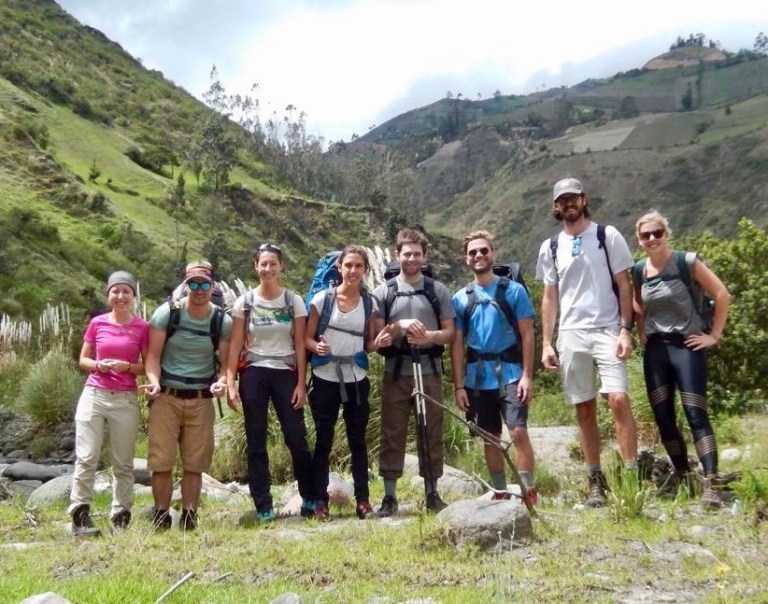
On the bus, we also met Price (from Houston) and Alina (from Germany). They were planning to hike the trek at the same pace as us, so we added to our group yet again. This completed what we now call the “Quilatoa Crew”. Even a few weeks removed from the trip, everyone is still keeping up via WhatsApp.
Once we arrived in Sigchos, we bought a few things in town (some water and an empanada con queso for me) and headed onto the trail. Sigchos is a great place for this — things are inexpensive and there are plenty of stores available. Since it sits deep in the mountains, it is not crowded and the only gringos that pass through are likely those hiking the trek.
Rolling green hills, patches of farmland, and cloudy skies are what you can expect while hiking the trek.


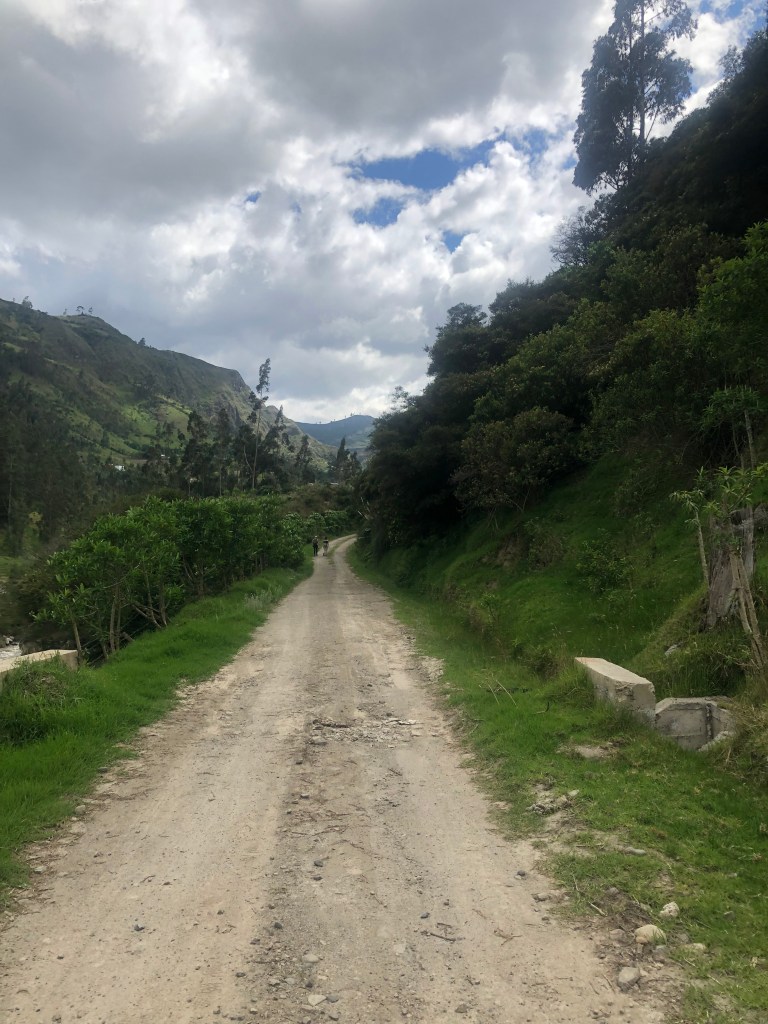
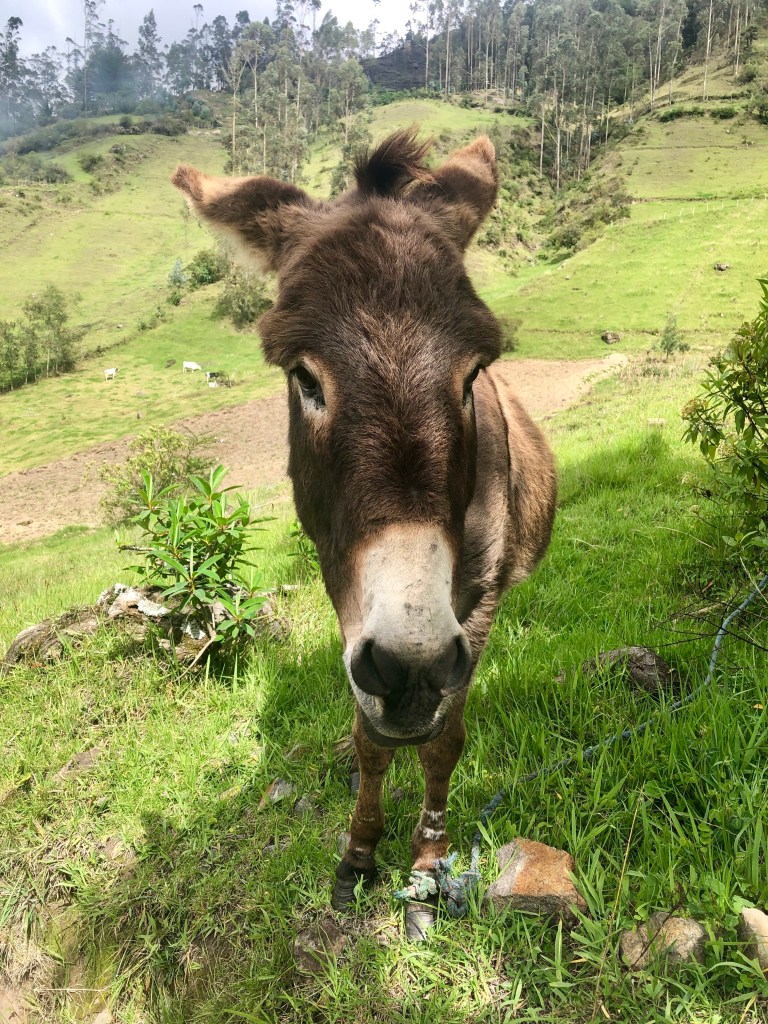
Everyone says “you will get lost at least once” on the trek. We thought we were better than most, but it proved untrue. In part, that was thanks to the many varieties of directions we found, including two versions from our hostel that were completely different, and the (spanish) directions from a local farmer who saw us and advised we take a different path. We listened to him and, after a significant climb of 30 minutes, reached the road that led to Isinlivi.
For the night, we stayed at the Lulu Llama hostel in Isinlivi. It is one of the highest rated hostels anywhere in the world, and for good reason. Somehow I failed to take any pictures there. The St. Bernard Dog, Lulu Balu, does follow me on Instagram now, though.
The night at the hostel included a sauna and solar-powered hot tub (which was warm at best), hot showers, a fantastic dinner (family style again), and goofing off around the wood burning stove before going to bed. We also polished off some red wine. The only people staying there was our group of 7 (plus another girl added for about two days), a friendly English couple, and a gentleman from Portland who I chatted with in the sauna.
Quilatoa Day 2 – Isinvili to Chugchilan
After breakfast and coffee, the trek continued. Day 2 was more challenging to navigate with even more significant differences in our directions, and somewhat confusing paths en route. At times we went through gates which were piles of sticks or gates which were just barbed-wire fences that we had to move out of the way to continue on. Sometimes we stepped over, never under.
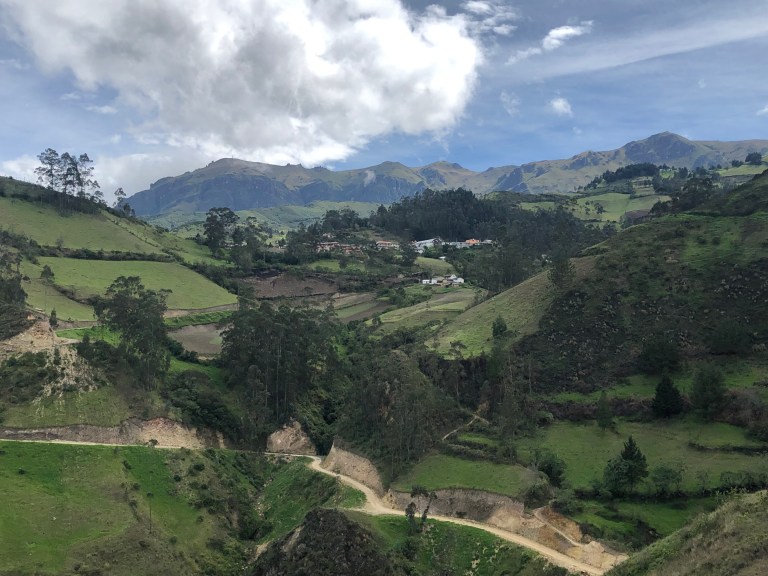
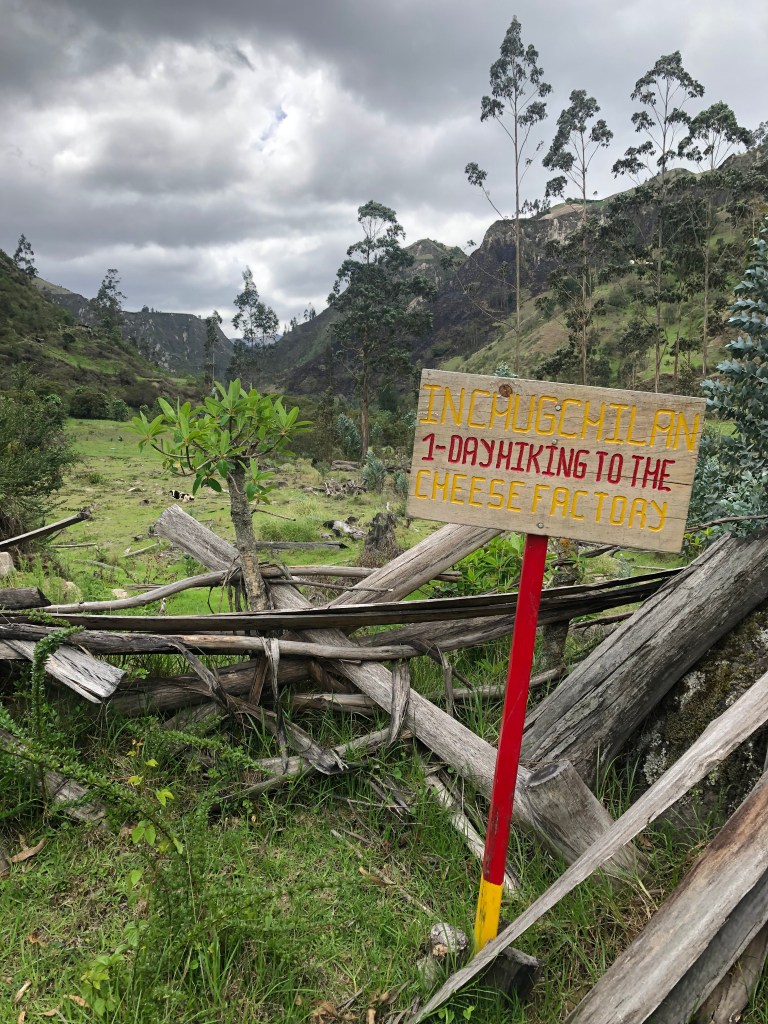
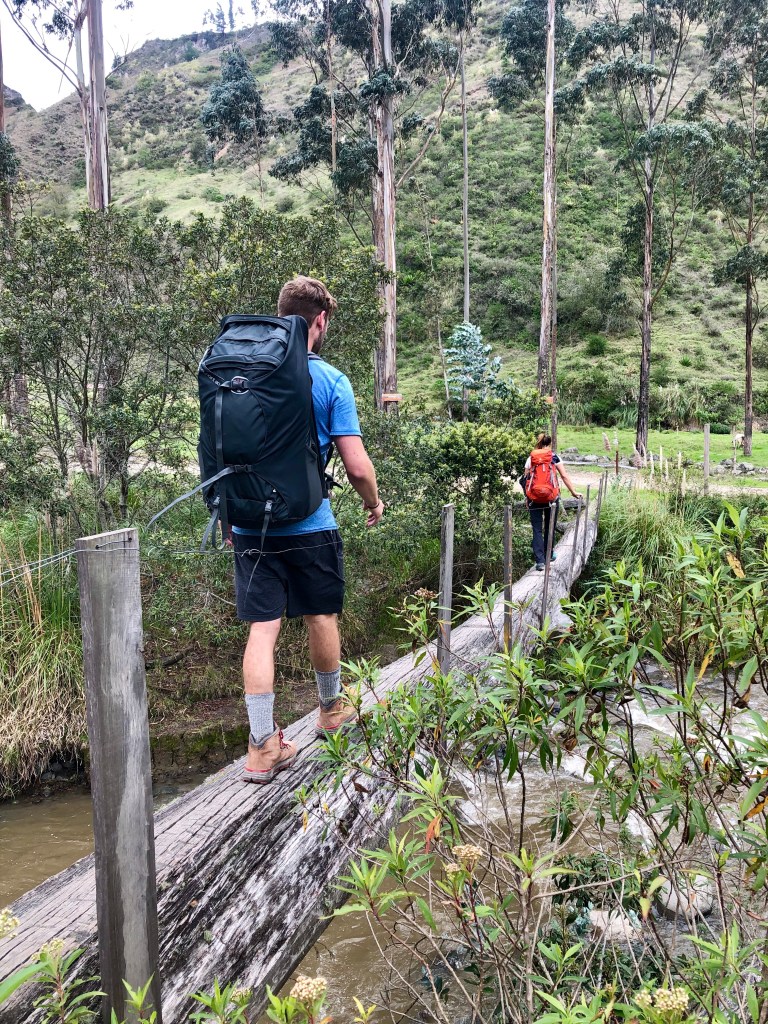
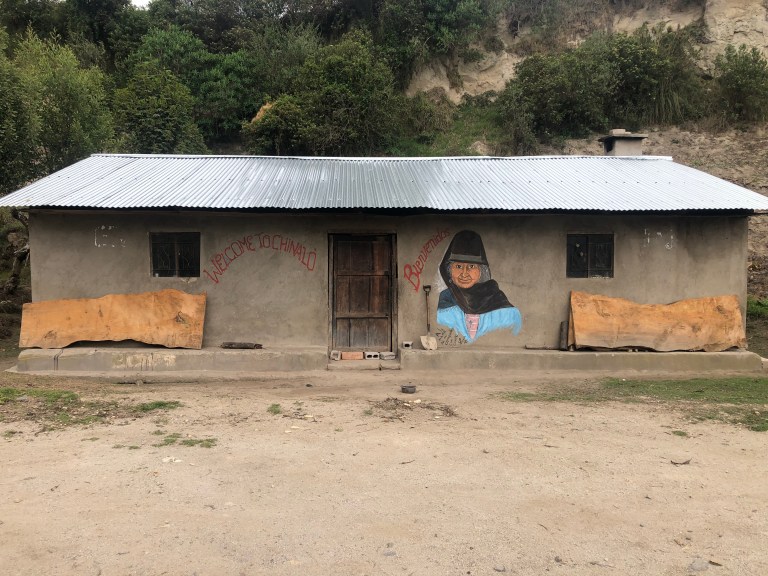
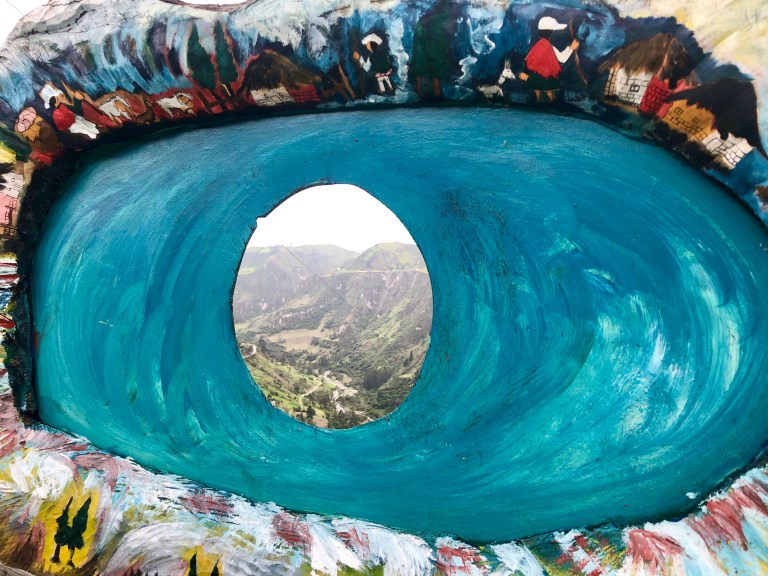
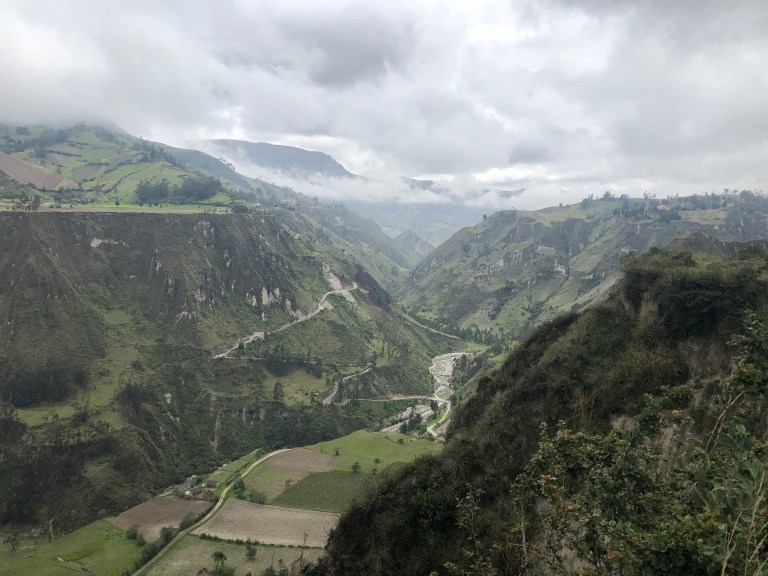
The hike was nice. As we got close to our destination, it started to rain a little. This would be the only 10-15 minutes of rain I experienced while in Ecuador. The last part of the hike is a long uphill slog up a road. We passed 20-30 children returning home from their school. About half were brave enough to respond to our “holas”.
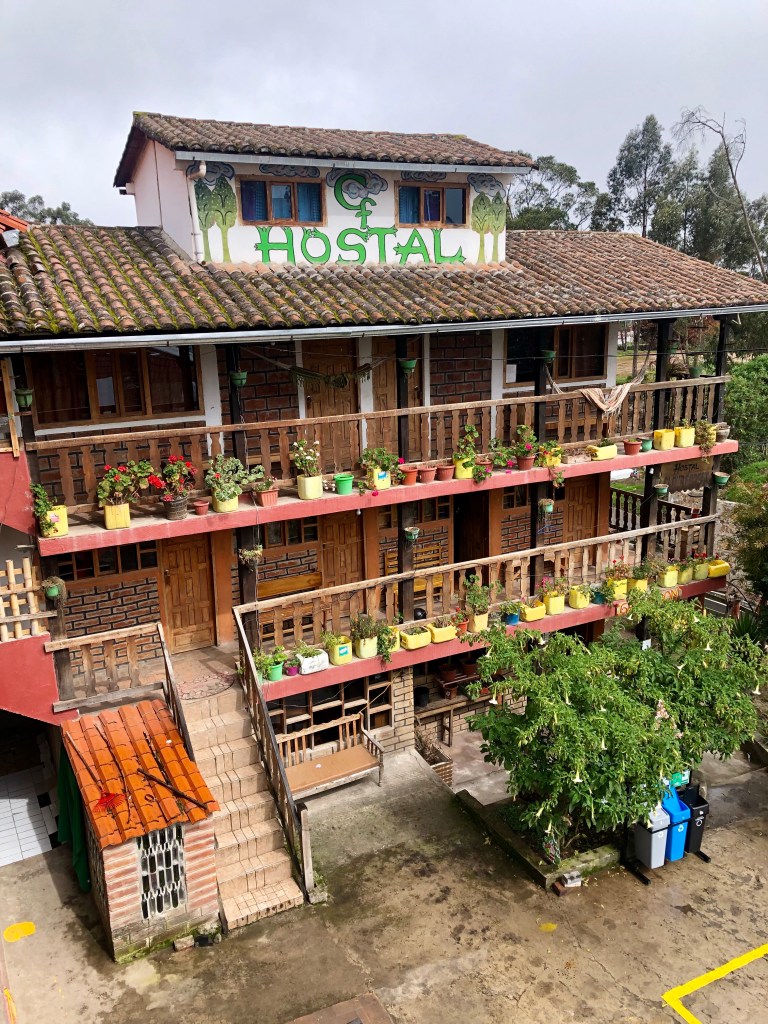
At last, we arrived at the Cloud Forest Hostel. It was just after lunchtime, and we were able to order lunch and beers. The nice part of day 2 was having significant down time to hang out, read, and talk with others. There were a few other guests at the hostel, but the majority was our group again.

Quilatoa Day 3 — Lake Quilatoa
On the third and final day we decided to skip the hike to the lake and take a private shuttle for $1 per person. This saved us a long day of hiking and ensured we could get to the lake earlier in the day when the weather was more likely to be cooperative, allowing the lake to show off its full brilliance.
We planned to hike around the entire rim, which is a 4.5-6 hour hike. Once we got there and saw it, we decided the best bet was to get a different view by hiking down to the bottom of the lake. So, thats what we did.
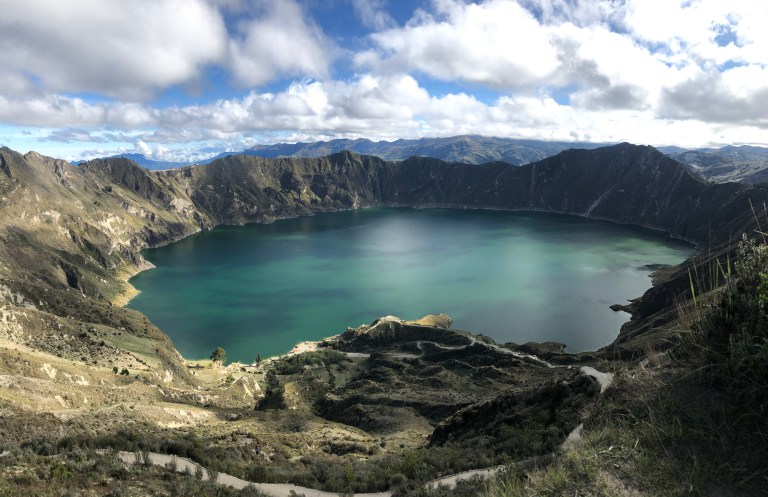
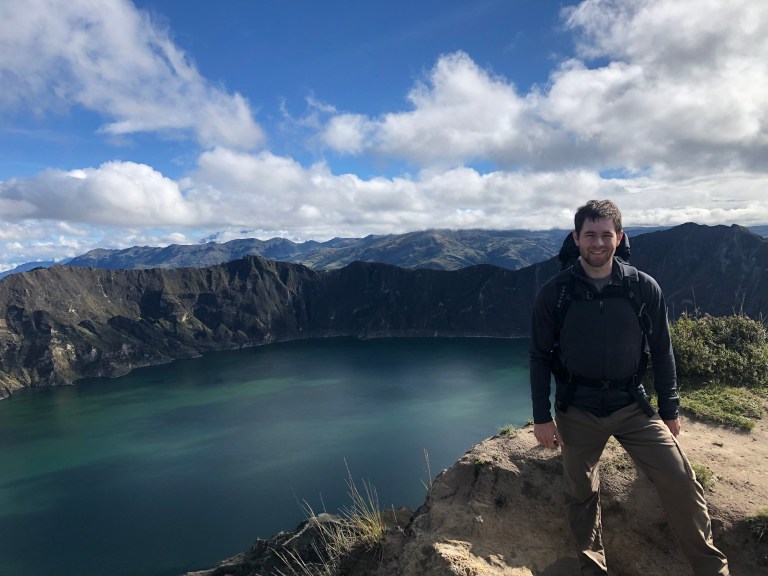
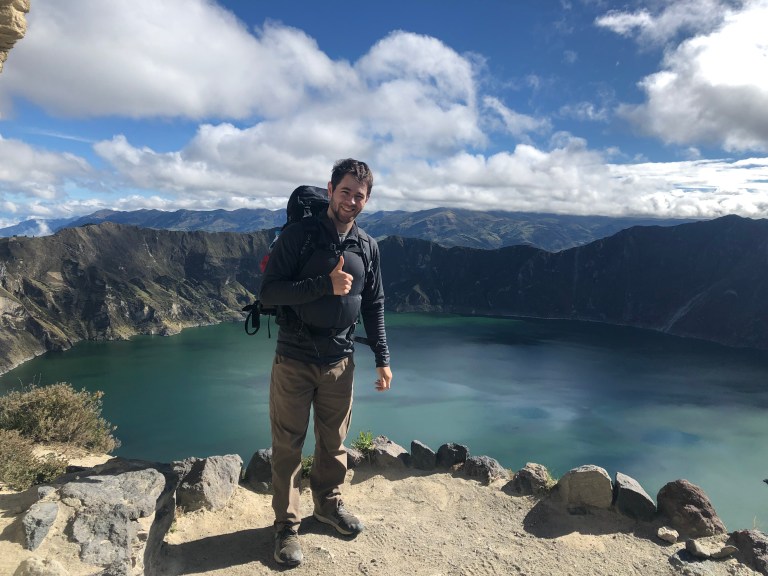
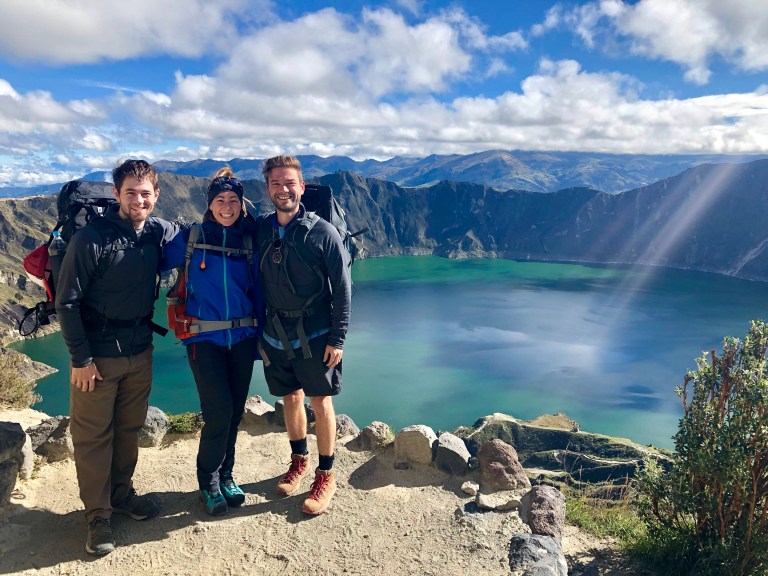
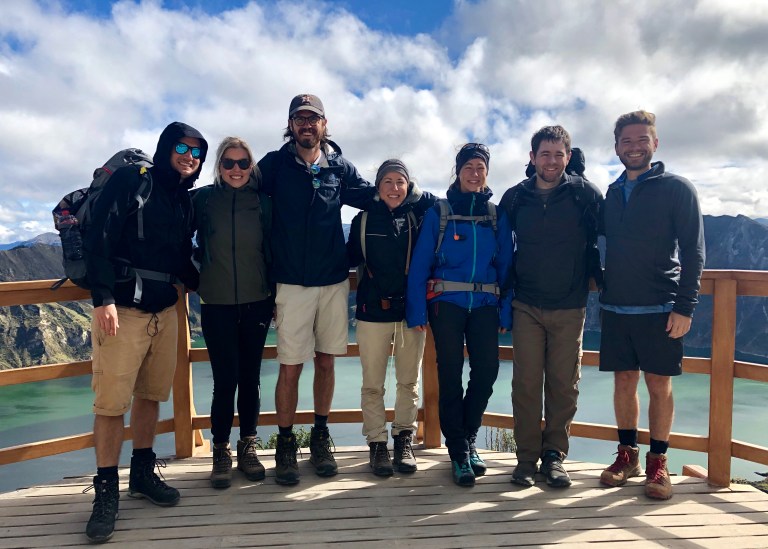

The path down looked a lot like the Great Wall of China. At least it looked that way to me. I have never seen the Great Wall of China.
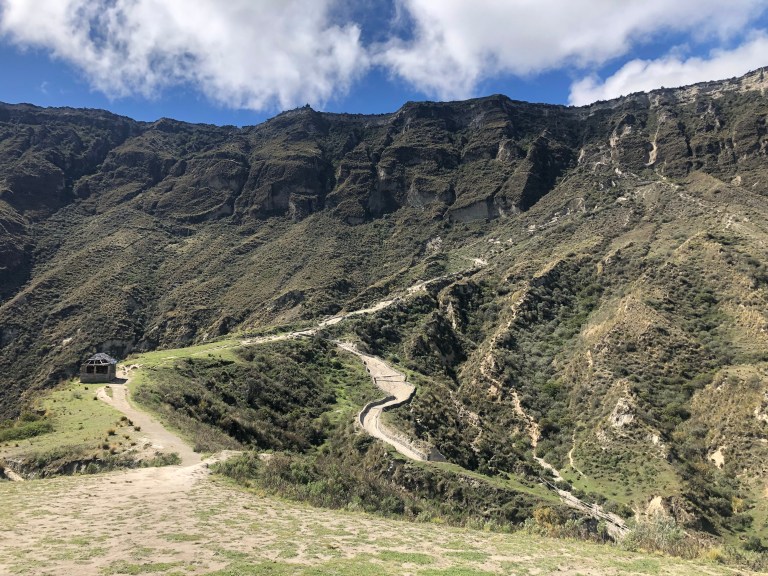
Hiking up was tough. It took us about 25 minutes of non-stop slogging. During that, we gained roughly 1500 feet of elevation (I could be wrong on that — it may be more or less).
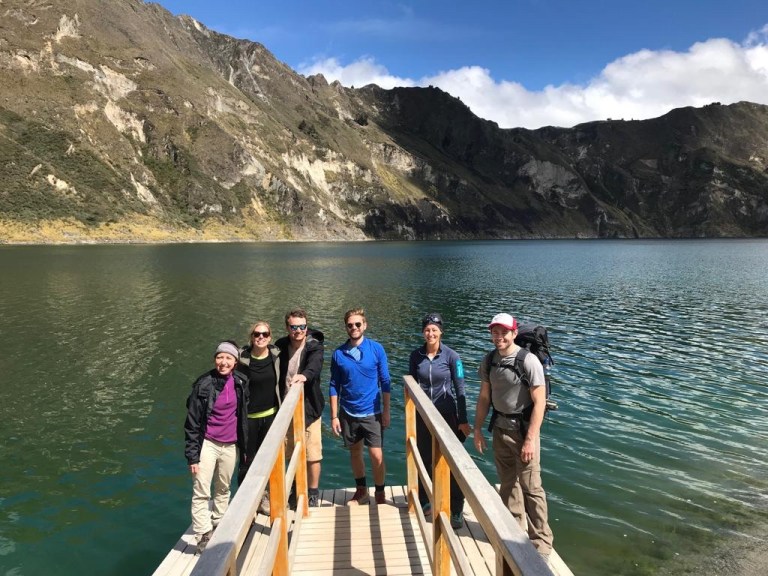
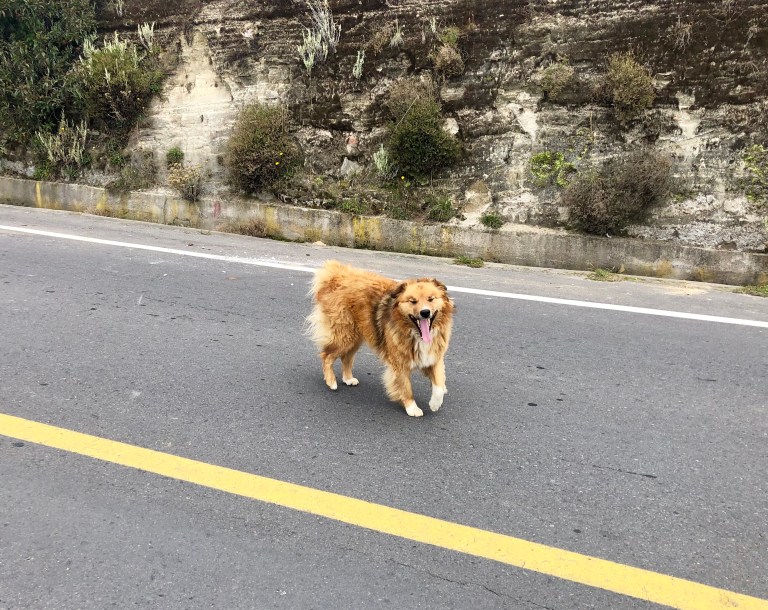
To complete the trip, we had to hike down to the bus station. In this case, the station was just a random place on the road. On the first part of the walk, I made friends with this dog. He followed us for at least 15 minutes.
Someone told us it was a 10 minute walk but it turned out to be a 15 minute drive. Fortunately we decided to hop into two taxi trucks and get a ride for $1 each.

While waiting for the bus, we got an offer to have a private shuttle ride in a truck back to Latacunga. The 1-hour ride was, you guessed it, $1 each.
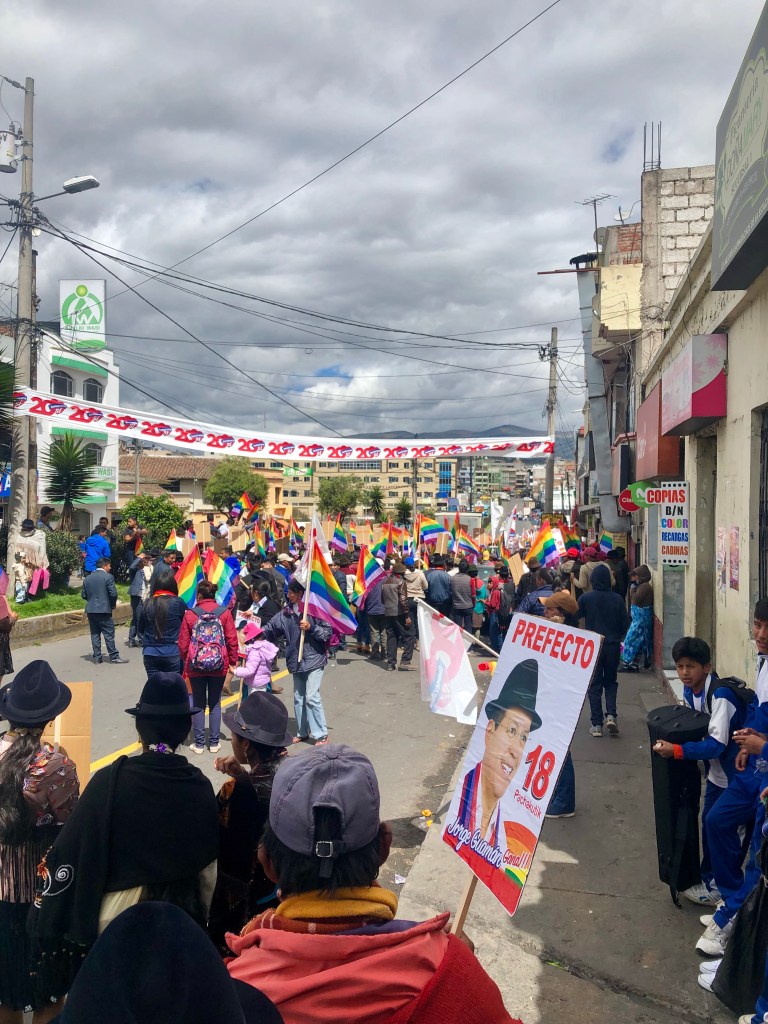
A few of us got dropped off early and walked back to Hostel Tiana, where we had checked bags with things we didn’t need for the trek. Along the way, there was a political rally or festival of sorts taking place.
When we got back, we all exchanged contact info, repacked bags, changed clothes, and got ready to move on.
The trek is awesome and entirely worth doing, but what made it truly memorable was the new friends I made in the process.
Cheers!
 Chambers Adventures